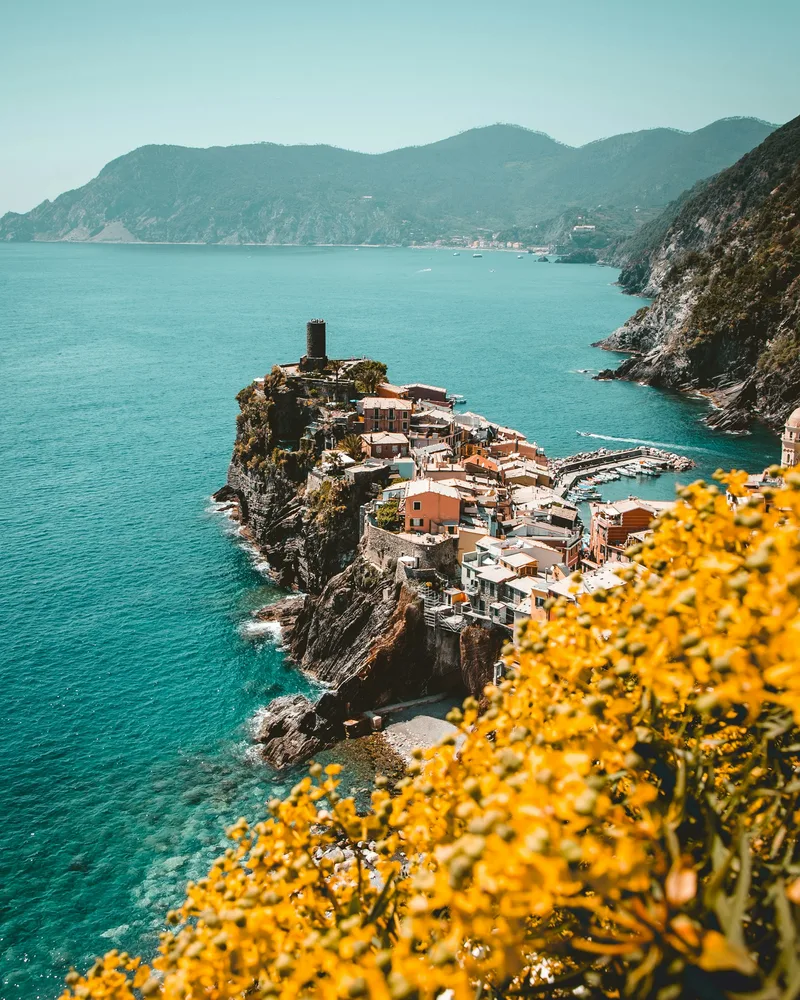
Italy's property market is one of the most talked-about in Europe and one of the least easy to generalise. Ask what property for sale in Italy costs and the honest answer is: it depends entirely on where. A renovated farmhouse in Tuscany and a village house in Calabria are both Italian properties, but they occupy different universes in terms of price, demand, and investment logic. This guide breaks it down by region, for buyers with serious intent.
Tuscany: the global benchmark
Tuscany remains the reference point for international buyers. The hill towns of Chianti, the Val d'Orcia, and the area around Siena command premiums that rival parts of the French Riviera. Expect to pay €3,000–€6,000 per square metre for restored farmhouses (casali) in prime areas, with fully renovated stone properties near Montalcino or Montepulciano pushing well above that. For a liveable 150 sqm property with land, €600,000–€900,000 is a realistic entry point; exceptional estates start at €1.5M and climb sharply.
The strong demand from American, British, and German buyers keeps this market competitive. Properties that appear underpriced tend to carry substantial renovation costs — the exterior stone might be intact while the interior needs complete replumbing, rewiring, and damp treatment. Budget an additional €800–€1,200 per sqm for a full renovation.
Sicily and southern Italy: the value case
Sicily offers the most compelling contrast. Palermo, Catania, and the baroque towns of the Val di Noto have seen growing international interest, but prices remain far below their northern equivalents. Coastal properties near Taormina or on the Aeolian Islands command €2,000–€4,000 per sqm. Inland villages in the Nebrodi or Madonie mountains — the same areas driving the famous €1 house programme — see prices as low as €30,000–€80,000 for habitable properties requiring only cosmetic work.
Puglia, the heel of Italy's boot, sits between the two poles. Trulli (conical stone dwellings) around Alberobello have become tourist properties; a restored two-bedroom trullo runs €120,000–€250,000. The coastal towns of the Salento peninsula — Gallipoli, Otranto, Santa Maria di Leuca — attract buyers priced out of Tuscany and the Amalfi Coast, with beachside apartments available from €150,000.
Lombardy, Veneto and the lake districts
The lakes — Como, Maggiore, Garda — represent a different kind of Italian property, with a loyal market of Central European buyers (Swiss, Austrian, German) who have pushed prices to levels the south would find startling. A two-bedroom apartment with a lake view on Como now starts at €350,000; historic villas run €2M–€8M. The lakes market has a defined season (April to October) that limits year-round rental potential.
Milan's property market is one of the most liquid in Italy, driven by domestic demand, corporate relocation, and proximity to major financial institutions. Central apartments (Brera, Navigli, Porta Romana) trade at €5,000–€9,000 per sqm. Venice's historic centre is restricted by residency requirements and complex purchase rules for foreigners; the Venetian lagoon islands offer slightly more accessible entry points.
The buying process for foreigners
Foreign nationals (including non-EU buyers from the US, UK, and Australia) can purchase property in Italy without restriction, provided they are citizens of countries with reciprocal property rights — which includes most Western nations. The standard process runs through a compromesso (preliminary contract), a deposit of 10–30%, a notary-certified atto di vendita (deed of sale), and payment of registration and notary fees of roughly 9–10% (3% on primary residences).
You will need an Italian tax identification number (codice fiscale), obtainable from the Italian consulate in your country before you travel. Financing through Italian banks is available but noticeably harder for non-residents than for EU citizens; most foreign buyers fund cash or through their home-country mortgage facilities.
What to watch in 2026
The one-euro house programmes in municipalities across Abruzzo, Sicily, and Sardinia continue to generate international coverage that outpaces the actual transaction volume. More substantively, Italy's superbonus renovation incentive has now wound down, removing a significant stimulus that drove renovation activity between 2020 and 2024. Some buyers are therefore finding properties priced for renovation that sellers over-estimated the tax credits for — a negotiating opportunity if you understand the numbers.
For buyers considering southern Italian property as a long-term investment rather than a lifestyle purchase, the key variable remains the rental market: short-term rental demand is concentrated in coastal areas and July–August, with limited out-of-season bookings. The lifestyle case — cheaper cost of living, excellent food, UNESCO-listed landscapes — remains strong on its own terms.
You are reading about Italy. Foreign-ownership rules, purchase taxes and letting licences there move more often than buyers expect, and the change usually lands after you have committed. We will email you when they do.