By Roshan L. Dsilva · Smart Buy
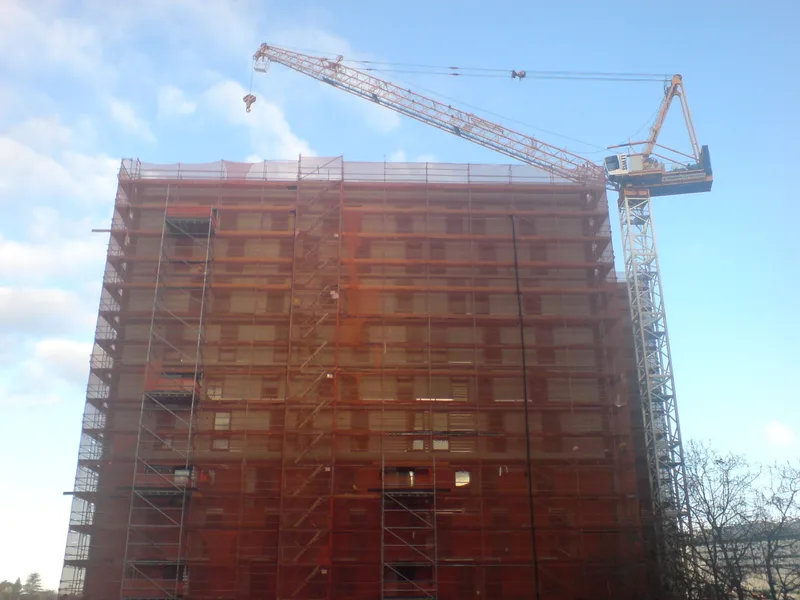
Buying from a developer — off-plan, or in a new subdivision — is a different transaction from buying a house that exists. You are not buying a building. You are buying a promise to build one, and everything that can go wrong lives in the gap between the two.
It can be an excellent way to buy. New stock, a price set before completion, payment spread across the build, and the pick of the plots. But the diligence is almost entirely different from a resale purchase, and the single most common error is assuming that statutory protection covers more than it does.
What the protections actually cover
Serious markets require your money to be held away from the developer's own accounts. Two examples worth knowing because they are the models others copy.
Dubai operates escrow under Law No. 9 of 2007. Buyer payments go into a project-specific escrow account at a bank approved by the regulator, rather than into the developer's general operating account, and those funds are ring-fenced from the developer's creditors.
Spain works differently, through guarantees rather than escrow. Under Ley 20/2015 — in force since 1 January 2016, replacing the older Ley 57/1968 — every payment you make before completion must be secured by a bank guarantee or an insurance policy. If the property is not delivered you claim against the guarantor, not against the developer's insolvency estate, which is the difference between a process and a queue. Guarantees may only be issued once the developer holds the necessary planning permission.
Now the part that marketing brochures leave out. These regimes protect your money against the developer failing. They do not protect you against the three things that actually go wrong most often.
- Delay. A project can run twelve or twenty-four months late with escrow working exactly as designed. Escrow governs where the money sits, not when the building finishes.
- Quality. Escrow does not measure whether what was built matches what was specified.
- The market. If values are lower on handover day than on signing day, that is your loss, and it is the risk you accepted in exchange for today's price.
“Escrow protected” and “risk free” are not the same claim. Anyone using them interchangeably is selling.
Check the developer before you check the building
With a resale you assess a property. With off-plan you are assessing a company, and the questions are those you would ask about any counterparty.
- What have they completed — not launched? Ask for projects finished and handed over, then go and look at one. Talk to people living in it. Launch renderings tell you about a marketing budget.
- Were those projects on time? A developer with a pattern of two-year overruns will probably run two years over again.
- Who actually builds it? The developer and the contractor are often different companies with different balance sheets.
- Are they registered with the regulator, and is this project registered? Where a register exists, a project's absence from it is decisive.
- Is the escrow or guarantee real? Ask for the account details and the guarantee document, and have your lawyer confirm they exist. Pay into the escrow account, never into a general company account, and never to an individual.
Read the contract for the things nobody discusses
Developer contracts are drafted by the developer. That is normal; it just means you should read them as an argument rather than a description.
What happens when it is late. Is there a long-stop date after which you may walk away with your money? Are there penalties, and are they real money or a discount on an extra? A contract with no consequence for delay is a contract that expects to be late.
What they may change. Many contracts permit variations to layout, materials and specification within a tolerance. Find the tolerance. “Or similar quality” is doing a great deal of work in most of these documents.
What the payment schedule is tied to. Payments linked to construction milestones — foundation, structure, roof — are safer than payments linked to dates, because dates arrive whether or not anything has been built.
What the common areas will cost. The pool, gym, gardens and gate are shown in the rendering and charged in the service fee. Ask for the estimated annual charge in writing. First-year figures quoted by developers have a habit of being optimistic, and the shortfall lands on owners.
Whether you can let it. If letting matters to you, confirm it is permitted in the building's own rules, not only in national law. Plenty of new developments prohibit short lets in the community documents.
Additional questions in a new subdivision
Buying a plot or a house in a development that is only partly built adds another layer.
- Who completes the infrastructure, and when? Roads, drainage, water, power and lighting are frequently finished after the first houses are occupied — and occasionally not at all if the developer stops.
- What happens to the unsold plots? If the developer sells the remainder to another company, your neighbours and the finish standard may change entirely.
- Who runs it once the developer leaves? There is usually a handover to an owners' association. Ask when, on what terms, and with what reserve fund. A community handed over with no reserve is a special assessment waiting to happen.
- What are you actually looking at from the plot? The empty land beside you has an owner and a permitted use. Establish both.
The one rule
Use your own lawyer, engaged by you, paid by you, with no relationship to the developer or the agent selling the unit. A developer who is reluctant for you to take independent advice has told you what you need to know.
Everything else in this article is a question. That one is a rule, and it applies just as firmly to the resale purchases covered in our due-diligence guide.
Nothing here is legal advice, the two regimes described are examples rather than a survey, and rules change. Verify the position in your market, with a lawyer in that market, before committing money.