By Dimitri Papadakis · Market Analysis & Investment
The Costa del Sol was the deal a generation ago. Málaga airport opened up the coast, early buyers picked up apartments in Marbella and Nerja for €60,000–€120,000, and the combination of capital growth and rental yield delivered exceptional returns through the 2000s. That market is now mature. Prices on the Golden Mile have tripled since 2013. Gross rental yields in prime Marbella sit at 4–5% and falling as purchase prices continue to rise. The buyer who arrives today is not getting the 2003 deal — they are paying for someone else's 2003 deal.
Three markets are now where the Costa del Sol was 20 years ago: dramatically underpriced relative to their natural endowments, with defined catalysts pulling institutional attention toward them, and specific risks that sophisticated buyers can underwrite. Albania's Ionian Riviera, Northern Cyprus, and Montenegro's Bay of Kotor each warrant detailed analysis.
Albania's Ionian Riviera
Albania's south coast — the stretch from Sarandë to Himara, roughly 100 kilometres of cliffs, turquoise water, and undeveloped shoreline — was almost entirely unknown to international buyers before 2020. The combination of EU candidate status (granted 2014, formal accession negotiations active since 2022), a major road infrastructure programme connecting the coast to Tirana, and exceptionally low asset prices has driven a surge of interest from Greek, Italian, and increasing numbers of Northern European buyers since 2022.
Pricing in 2026: a 2-bed apartment in Sarandë with sea views can be purchased for €65,000–€95,000. A villa plot within 200 metres of the sea in Himara starts at €80,000–€150,000 for 500–600 m². New build villas in Ksamil — the most touristically developed section, adjacent to the Butrint UNESCO site — are selling for €180,000–€320,000 for a 3-bed unit.
Yield: Short-term rental yields in Sarandë and Ksamil are running at 10–14% gross in peak season, driven by dramatic undersupply of quality accommodation relative to domestic and regional tourist demand. The Albanian Riviera saw over 900,000 domestic tourists in summer 2025, the majority staying in informal accommodation that represents a direct opportunity for quality-certified rentals at premium rates.
Growth catalysts: The Sarandë-Gjirokastër motorway (completion 2027) will cut journey time from Tirana by 40 minutes. EU accession trajectory — Albania is now on a credible 2028–2032 accession timeline — will drive institutional capital into the market as the sovereign risk premium compresses. Albanian property law now permits full freehold ownership by foreign nationals following 2023 legislative changes.
Title and liquidity risk: Significant. Albania's land registry (ALUIZNI) is still resolving legacy land tenure disputes from the communist-era collectivisation. Some coastal plots in Himara have unresolved title disputes between private claimants and the Albanian state. Buyers must commission a full title search through a Tirana-based licensed attorney, not a local agent. Resale liquidity is low: the buyer pool for €250,000+ properties is primarily international, meaning exit may take 12–24 months. This is a 5–10 year investment horizon market, not a liquid asset.
Northern Cyprus
Northern Cyprus occupies the northern third of Cyprus island and is recognised internationally only by Turkey. This political status — unresolved since the 1974 division — creates the defining paradox of the market: extraordinarily low prices for a Mediterranean island with first-world infrastructure, and title risk that is specific and manageable but that conventional wisdom overstates.
Pricing in 2026: a 2-bed apartment in Kyrenia (Girne) — Northern Cyprus's main coastal town, with a Crusader-era harbour, established restaurants, and a University population — costs €80,000–€140,000. A villa with private pool in the Kyrenia hills or Esentepe commands €200,000–€380,000. These prices are 40–60% below comparable properties in EU Cyprus (the southern Republic), which itself is now trading at 2007-era peak prices following a surge in post-2022 demand from Russian, Ukrainian, and Israeli buyers seeking alternative residency.
Yield: Short-term rental yields of 7–10% gross are achievable in Kyrenia and the Karpaz Peninsula. The key constraint is that booking platforms (Airbnb, Booking.com) list Northern Cyprus properties under the Turkish Republic of Northern Cyprus designation — some guests are deterred, meaning occupancy rates are lower than comparable EU-jurisdiction properties. Skilled operators using direct booking channels and specialist platforms mitigate this.
Growth catalysts: Reunification talks between the two sides of Cyprus — mediated by the UN — have been intermittent but persistent. Any reunification framework that brings Northern Cyprus under EU law would result in immediate, dramatic price appreciation as the political discount evaporates. Even absent reunification, infrastructure investment from Turkey and increasing direct flights from European capitals are drawing a new generation of buyers.
Title risk: The title issue in Northern Cyprus is specific: properties transferred to Turkish Cypriot sellers after 1974 may have prior Greek Cypriot owners who retain legal claims under international law. The practical approach is to purchase properties with pre-1974 Turkish Cypriot title (known as title type 1), which has no prior-owner claim. Type 1 titles are unambiguous; properties with post-1974 exchange or allocation titles require more careful due diligence but remain insurable.
Montenegro's Bay of Kotor
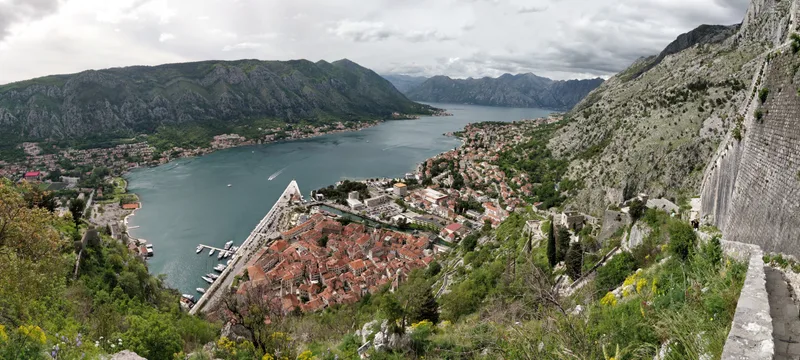
Montenegro joined NATO in 2017 and is in active EU accession negotiations (candidate since 2010, the most advanced of the Western Balkans candidates). The Bay of Kotor — a fjord-like inlet of remarkable beauty, UNESCO World Heritage listed, with four medieval walled towns along its shores — is the country's premium real estate location and has seen consistent international attention since the Aman Sveti Stefan resort opened in 2011.
Pricing in 2026: a renovated stone house in Perast or Dobrota (the most sought-after Bay of Kotor villages) costs €280,000–€650,000. A modern apartment in Kotor Old Town — in one of Europe's best-preserved Venetian walled cities — runs €2,800–€4,500/m². Tivat, home to the Porto Montenegro superyacht marina, offers new-build marina apartments at €3,500–€6,000/m².
Yield: 6–9% gross in peak season. The superyacht market at Porto Montenegro drives extraordinary premiums for luxury rental properties (4-bed villas at €5,000–€12,000/week in July and August), and the UNESCO World Heritage designation provides a structural ceiling on new supply in the most desirable locations.
Growth catalysts: EU accession (projected 2028–2030 under current negotiating pace) is the transformative event. Montenegro uses the euro as its currency despite not being an EU member, eliminating FX risk for eurozone buyers. Airbnb-category tourism has grown 35% from 2022 to 2025 as direct flight connections from London, Frankfurt, and Amsterdam increased substantially.
Title and liquidity risk: Moderate. Montenegro's land registry is functional and title searches are reliable. The main risk is specific to Perast and Kotor Old Town: planning restrictions within the UNESCO buffer zone limit renovation and new construction, which both preserves values and constrains the ability to extend or significantly develop property. The buyer pool is European and increasingly sophisticated; resale timelines of 6–12 months are realistic for well-priced quality properties.
The Bottom Line
The Costa del Sol is not a bad investment. It is a mature market with predictable returns, strong legal frameworks, and deep resale liquidity. What it is not is a market offering the asymmetric return potential of an emerging destination with a defined accession or development catalyst. Buyers who want that asymmetry — and can tolerate the specific risks of each jurisdiction — should be looking south-east, not south-west.